Roof Replacement in Dundee from $9,500. New Jersey prices, and the access priced as the real line item it is in this city. Free inspection and a written quote.
Scale changes the arithmetic by the river. A mill-era building carries a roof measured in tens of thousands of square feet, so it is priced per square foot rather than as a house, and the plant, curbs and ducting on it are frequently more of the cost than the membrane.
An architectural asphalt roof in New Jersey runs $9,500 to $26,000, and on a typical 2,000 square foot house most people pay $12,000 to $18,000 installed. Those are state figures, and on a Passaic building they are the starting point rather than the answer.


Those are New Jersey figures for an architectural asphalt roof, and on a typical 2,000 square foot house most people pay $12,000 to $18,000 installed. In this city they are the starting point rather than the answer, because the route to the roof is a genuine part of the cost and it varies street by street. Priced per square foot rather than as a building, because the roofs here are mill-scale. What moves it is the plant on top and whether production below can continue -- and exposure by the water, which puts perimeter fixing on the list.
Side access on the plot, somewhere to stand a dumpster without a street arrangement, a simple roof shape and a deck that turns out sound. In Wallington and parts of Passaic Park that is normal; in the Third Ward it is not.
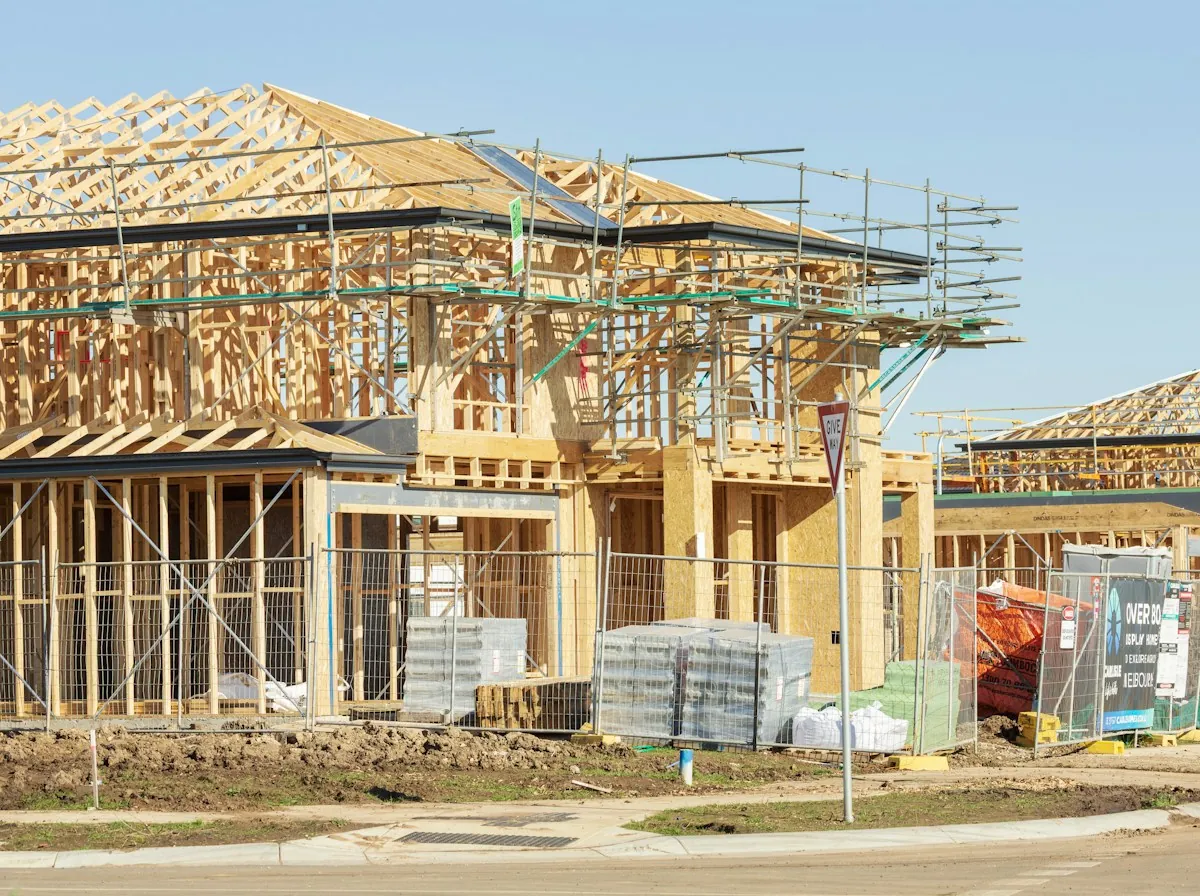
A continuous row with a narrow frontage, so material and waste share a few feet of sidewalk. A route onto the roof that runs through a tenancy. A trading business below whose hours the work has to fit. And long parapet runs, because coping is detail work.
How decking replacement is priced. It belongs in the scope as a rate per sheet, because nobody knows how much has softened until the covering is off, and a lump figure is a guess in one direction or the other.
The riverside area by the Dundee dam and canal, historically the industrial heart of the city and now part residential and part park.
Mill-era industrial buildings and workers' housing side by side, with newer riverside development among them.
Dundee is where the large-area low-slope roofs are. A mill-era building carries a roof measured in tens of thousands of square feet with plant, curbs and ducting on it, and on those the membrane is the smaller half of the cost. Exposure by the water is the other factor: perimeter fixing matters more here than inland.
Two things move a Passaic price more than the covering does, and both are consequences of density rather than of roofing.
At 22,514 people per square mile the answer is rarely simple. No side yard, usually no driveway, and a dumpster that has to go on the street with an arrangement. Material up the frontage and waste down it is labor, and a quote that does not mention it has either absorbed it or not thought about it.
An attached building has no eaves. Water leaves through an internal outlet or a scupper cut through a parapet wall, so the failures are at the coping, the upstand and the outlet. A roof quote covering the field and silent on those has priced the easy part.
A blocked outlet ponds the roof instead of overflowing off an edge. Water standing in a lap through a cold week expands and lifts it, then thaws and runs in through the gap it just made. Outlet capacity is the cheapest genuine upgrade on a roof here.
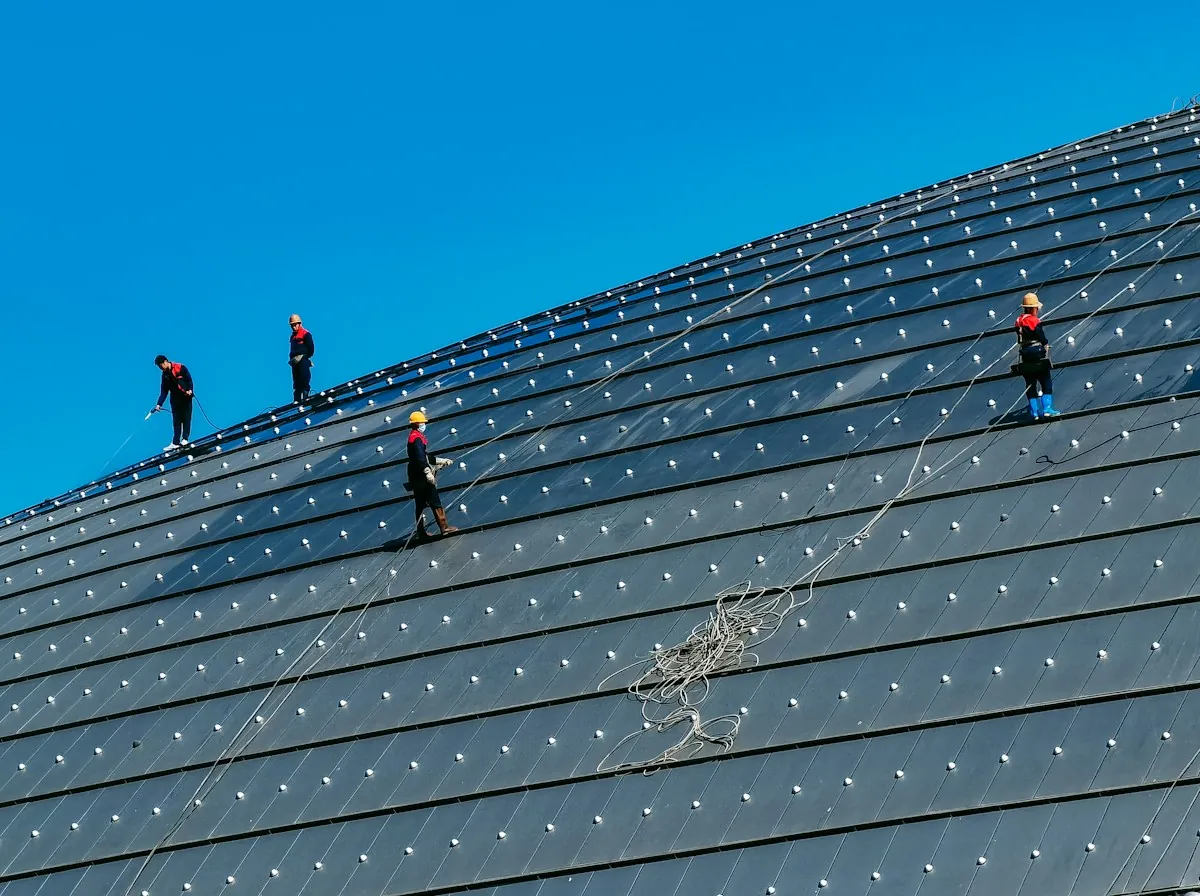
Large-area low slope is the whole job by the river, and at that scale the insulation specification and the attachment method matter as much as the membrane.
At mill scale black EPDM starts to give ground.
Very little shingle by the river -- the workers' housing that has it is the exception among industrial buildings.
Converted mill buildings are the interesting case by the river: residential units under an industrial-scale roof, frequently with original structure and later plant on top.
This is the genuine commercial roofing in the city: mill-era buildings with roofs measured in tens of thousands of square feet, plant on them and production underneath that cannot stop.
No side yard, no driveway, parapets on every side.
Semi-detached and pitched. Eaves are back in play.
The tightest frontages, and party-wall junctions.
The shop below decides the hours and the route.
Bus routes and loading bays. Arrange the street first.
A more open grid, so a dumpster needs no negotiation.
Detached houses, side access, sometimes no permit.
The questions that decide this job, answered up front.
Only where it has actually softened, and as a rate per sheet in the written scope rather than a lump guess. Nobody knows how much has gone until the covering is off, and on a dense attached building there is the extra question of how the waste gets down -- which is why it is stated rather than absorbed.
On the street in most of this city, which needs arranging rather than assuming, and the arrangement is frequently the longest lead time on the job. In Wallington and parts of Passaic Park it can sometimes go on the plot, and that is a genuine saving.
At an edge, almost certainly. An attached building has no eaves, so water leaves through an internal outlet or a scupper through the parapet -- and the failures are at the coping on top of the wall, at the upstand where the membrane turns up it, or at the outlet itself. The field is usually the last thing wrong with a roof here.
Rubber means EPDM, at $5 to $9 per square foot: bonded with adhesive and tape, black, and the least expensive single-ply. TPO is $6 to $12, welded at the seams and reflective, which matters on a large roof over occupied space. On a small rear addition EPDM is usually the right answer rather than the cheap one.
Two to five days on a house, four to seven on an apartment building, and one to three weeks on real commercial work. The roofing is rarely the long part: the street arrangement, the route onto the roof and any tenant notice periods are what set the start date in this city.
The route to the roof established before anything is priced. New Jersey figures, with the access stated rather than buried.